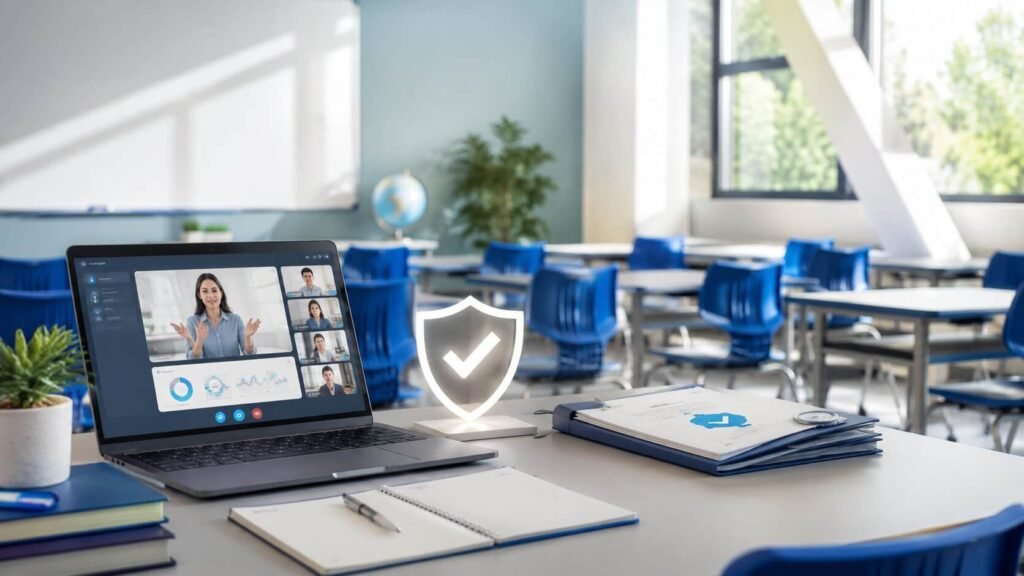
The Confidential Educational Institutions Regulatory Authority (PEIRA) has approved the first-ever regulatory system for virtual schools in Islamabad Capital Territory.
This move forms a proper system for the registration, regulation, monitoring. Quality assurance of online and virtual schools up to the higher secondary level.
PEIRA said that the policy aims to expand access to standard education for out-of-school children, students in remote areas, children with disabilities. Functioning learners who can’t go to routine schools.
The structure is expected to carry structure and accountability to the growing online education sector in the capital.
For parents, students, and educators, this system signals a new era of recognized virtual schooling.
It gives clear guidelines on what constitutes a legitimate online school and sets minimum standards for digital teaching, student assessment, and records security.
Quick takeaways
- PEIRA has approved the first regulatory structure for virtual schools in Islamabad Capital Territory.
- The system covers registration, regulation, monitoring, and caliber assurance for online schools up to higher secondary level.
- Target beneficiaries involve out-of-school children, remote field students, children with disabilities, and operating learners.
- Mandatory teacher training in digital teaching techniques is a key need.
- The policy aims to guarantee safe digital platforms and safeguard student figures.
- Virtual schools must comply with curriculum standards place by the federal public sector.
The structure sets a official system for the registration, regulation, monitoring. Grade assurance of online and virtual schools up to the higher secondary level.
What the New Framework Covers
The PEIRA system is thorough.
It addresses registration, regulation, monitoring, and quality assurance for all virtual schools running in Islamabad Capital Territory.
This includes schools offering education from principal through higher secondary levels.
Central spheres covered contain curriculum compliance, teacher qualifications, digital infrastructure, student assessment ways, and information protection.
The structure also mandates that virtual schools apply protected digital platforms to safeguard student details.
By setting these standards, PEIRA aims to eliminate unregulated online education providers and confirm that students get a quality education comparable to traditional schools.
Who Benefits from the Virtual Schools Framework?
The system specifically targets groups that have historically faced barriers to education.
Out-of-school children, who count in the millions in Pakistan, can now access formal education through recognized virtual schools.
Students in remote fields with limited access to physical schools will upside from online learning.
Children with disabilities, who may spot it tricky to take part in regular schools, are also a priority.
Functioning learners, such as youthful adults who require to gain a living as studying, can pursue education flexibly.
This inclusive strategy fits with global movements in education and Pakistan's commitment to Lasting Development Aim 4: standard education for all.
Mandatory Teacher Training in Digital Methods
A foundation of the structure is mandatory teacher training in digital teaching approaches.
Teachers must be proficient in using online platforms, creating engaging digital material, and assessing students remotely.
PEIRA will demand virtual schools to provide evidence of teacher training programs.
This confirms that educators aren’t just subject specialists and skilled in providing productive online instruction.
This condition addresses a frequent criticism of online education: the lack of teacher preparedness.
By mandating training, PEIRA aims to improve the caliber of virtual classrooms.
Registration Process for Virtual Schools
Virtual schools must register with PEIRA to work legally in Islamabad Capital Territory.
The registration routine involves sending in in-depth information about the school's curriculum, faculty, digital infrastructure, and student policies.
PEIRA will examine submissions to make sure compliance with the system.
Schools that encounter the standards will obtain a registration certificate, which must be renewed periodically.
Unregistered virtual schools will deal with penalties, such as closure.
This is a well-known step toward regulating the online education marketplace, which has seen a proliferation of unverified providers.
Quality Assurance and Monitoring Mechanisms
The structure sets up ongoing monitoring mechanisms to ensure virtual schools uphold quality standards.
PEIRA will conduct steady inspections, both announced and unannounced, to assess compliance.
Schools must send in annual reports on student performance, teacher qualifications, and infrastructure upgrades.
PEIRA may also solicit feedback from students and parents.
Non-compliance can result in warnings, fines, or revocation of registration.
This accountability system is designed to shield students and keep up trust in virtual education.
Curriculum and Assessment Standards
Virtual schools must track the curriculum prescribed by the federal government for their respective levels.
This ensures that students receive education equivalent to that in traditional schools.
Assessment methods must be sound and consistent.
Schools can employ online quizzes, assignments, and proctored exams.
PEIRA demands that assessments be designed to prevent cheating and guarantee academic integrity.
Students finishing their education through registered virtual schools will be eligible for certificates recognized by the relevant boards and universities.
Data Security and Student Privacy
The structure includes firm conditions for records security.
Virtual schools must use encrypted platforms to safeguard student figures from unauthorized access.
Schools must have obvious privacy policies and obtain parental consent for collecting student data.
Information breaches must be reported to PEIRA immediately.
This focus on data security is timely, given the growing matters about online privacy.
It gives parents confidence that their children's info is secure.
Challenges and Implementation Timeline
Rolling out the system will need coordination between PEIRA, virtual schools, and other stakeholders.
Challenges include securing that all schools comply, especially those operating informally.
PEIRA hasn’t announced a specific timeline for complete rollout, but the structure is productive immediately.
Schools are expected to start the registration procedure soon.
The accomplishment of the system will depend on awareness campaigns and capacity-building initiatives for school administrators and teachers.
Key Requirements of the PEIRA Virtual Schools Framework
| Requirement | Details |
|---|---|
| Registration | All virtual schools must register with PEIRA to operate legally. |
| Teacher Training | Mandatory training in digital teaching methods for all teachers. |
| Curriculum | Must follow federal government curriculum for respective levels. |
| Data Security | Use encrypted platforms and have clear privacy policies. |
| Monitoring | Regular inspections and annual reports required. |
| Assessment | Valid and reliable online assessment methods with integrity measures. |
Frequently Asked Questions
What is the PEIRA virtual schools framework?
The PEIRA virtual schools structure is a fix of regulations approved by the Personal Educational Institutions Regulatory Authority for online. Virtual schools in Islamabad Capital Territory.
It covers registration, teacher training, curriculum, data security, and quality assurance to confirm recognized and standardized virtual education.
Who needs to register under this framework?
All virtual schools working in Islamabad Capital Territory that present education up to higher secondary level must register with PEIRA.
This involves both new and existing online schools.
Failure to register can outcome in penalties or closure.
What are the teacher training requirements?
Teachers at registered virtual schools must undergo mandatory training in digital teaching techniques.
This covers using online platforms, creating digital copy, and carrying out remote assessments.
Schools must offer evidence of such training to PEIRA.
How will PEIRA monitor virtual schools?
PEIRA will carry out routine inspections, both announced and unannounced, to make sure compliance.
Schools must also hand in annual reports on student performance, teacher qualifications, and infrastructure.
Non-compliance can lead to warnings, fines, or revocation of registration.
Are certificates from virtual schools recognized?
Yes, students finishing their education from PEIRA-registered virtual schools will get certificates recognized by applicable boards. Universities, supplied the school follows the prescribed curriculum and assessment standards.
Readers should verify the most recent official source or original spot before taking action, because public updates can adjust after publication.
What data security measures are required?
Virtual schools must apply encrypted digital platforms to protect student records.
They need plain privacy policies and must obtain parental consent for figures collection.
Any information breach must be reported to PEIRA immediately.
Final Thoughts
The PEIRA system is a landmark step for virtual education in Islamabad.
It provides a evident way for schools to operate legitimately and assures parents of quality and security.
If you’re considering enrolling in a virtual school, inspect that it’s registered with PEIRA.
For school operators, now is the time to assess the structure and begin the registration workflow.
Stick around informed about updates from PEIRA to guarantee full compliance.
This system will shape the future of online learning in the capital.